Pet Care Tips: 7 Habits That Actually Keep Pets Healthy
Most pet advice online is a shopping list in disguise….

Most pet advice online is a shopping list in disguise. Smart collars, ten-step grooming routines, a different supplement for every organ.
Here’s what vets keep repeating instead: boring, consistent basics. Do these seven things and you’ve covered most of what matters for a dog or cat.
Table of Contents
1.Pet Care Tips: Book the boring checkup
Healthy pets still need exams. That’s the whole point.
Veterinary guidelines from AAHA and the AVMA treat regular physical exams as the cornerstone of preventive care, because small problems show up early when someone is looking. Vaccines, parasite control, diet and dental health all get decided at that same visit, based on your pet’s species, age, lifestyle and risk.
Puppies, kittens and seniors need visits more often than a healthy adult. Your vet sets the schedule, not a blog post, including this one.
2. Treat teeth like they matter
Owners are good at remembering vaccines and terrible at remembering teeth.
The AVMA has pointed out that dental disease isn’t just a bad-breath problem. Left alone, it hurts. That’s a pet who can’t tell you their mouth aches, so they just eat a bit slower and get a bit grumpier.
What actually works:
- Brush at home with pet toothpaste. Human toothpaste is a no.
- Start with a finger, a taste of the paste and a few seconds. Build up slowly.
- Schedule dental exams and professional cleanings when your vet recommends them
- Ask about dental treats and diets before buying them. Quality varies wildly.
Bad breath that suddenly gets worse is worth a call.
3. Feed the pet you have, not the one on the bag
Feeding charts are a starting point. Your pet’s body is the real answer.
Weight creeps. A few extra treats a day, a table scrap here, and suddenly your dog is carrying a pound or two they shouldn’t. Ask your vet what a healthy body condition looks like for your pet and weigh them at checkups.
Keep these off the menu for dogs, no exceptions:
- Chocolate
- Grapes and raisins
- Anything sweetened with xylitol
- Onions and garlic
Cats have their own traps. Lilies are seriously dangerous for them, so keep them out of the house. When in doubt about a food or plant, call your vet or a pet poison hotline before it becomes an emergency, not after.
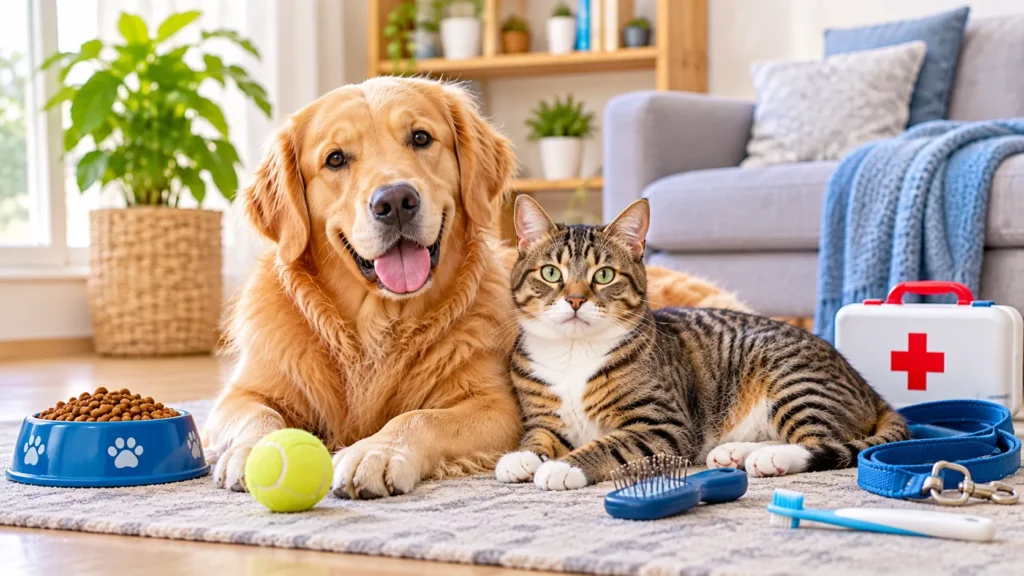
4. Move them, then make them think
Exercise is half of it. Mental work is the other half, and people skip it.
The AVMA lists age-appropriate exercise, enrichment and training as part of good care, and it strengthens the bond too. A bored dog destroys a couch. A bored cat gets weird in other ways.
Simple stuff:
- Daily walks for dogs, sized to age and breed
- Puzzle feeders instead of a bowl
- Short training sessions: five minutes beats forty-five
- Climbing spots and window perches for cats
- Rotating toys so nothing gets stale
- Play sessions that end with a “catch,” so cats actually finish the hunt
5. Make sure they can find their way home
Microchips only work if the registry has your current number. Moved? New phone? Update it today.
Pets who go outdoors should also wear an ID tag. It takes thirty seconds to read and it’s the fastest way a stranger can reach you.
6. Build the emergency kit before you need it
Nobody builds this at 2 a.m. with a limping dog in the car.
A basic kit:
- Gauze and bandage wrap
- A digital pet thermometer
- Saline for flushing
- Your vet’s number and your nearest 24/7 emergency clinic’s number
- Copies of medical records and vaccine history
- A few days of food and any regular medications
Don’t stock medications on your own. Many human drugs are dangerous to pets, so ask your vet what’s safe. Also decide in advance where you’d go in a disaster and who has the carrier.
7. Watch for small changes
You know your pet better than anyone. That’s your biggest advantage.
Eating less, drinking more, hiding, hesitating at stairs, a new accident indoors. These are the signals. Any sudden behavior or health change deserves a call to the vet, and the sooner the better.
Quality of life matters across the whole lifespan, including the later years. If your pet seems to be declining, talk to your vet honestly about what’s best for them.
FAQ
How often should I take my pet to the vet?
Most healthy adult pets benefit from at least one checkup a year. Puppies, kittens and senior pets usually need more frequent visits. Your vet sets the actual schedule based on age, lifestyle and risk factors, and that covers vaccines, parasite control, diet and dental care.
Do I really need to brush my dog’s or cat’s teeth?
Veterinary groups like the AVMA and AAHA treat dental care as part of preventive health, and untreated dental disease causes pain. Brushing at home plus regular dental exams is the standard advice. Start slowly, use pet-safe toothpaste (never human toothpaste), and ask your vet about dental treats or diets.
What should be in a pet first-aid kit?
At minimum: gauze and bandage wrap, a digital thermometer, saline, your vet’s number, the nearest 24/7 emergency clinic’s number, and copies of medical records. Ask your vet before adding any medication, since human drugs can be dangerous for pets.
Is microchipping enough to find a lost pet?
A microchip only works if the registry has your current phone number and address. Pair it with an ID tag for pets who go outdoors, and update both whenever your details change.
Medical Disclaimer: This article is for informational purposes only. Always consult a qualified veterinarian regarding your pet’s health and medical needs.